
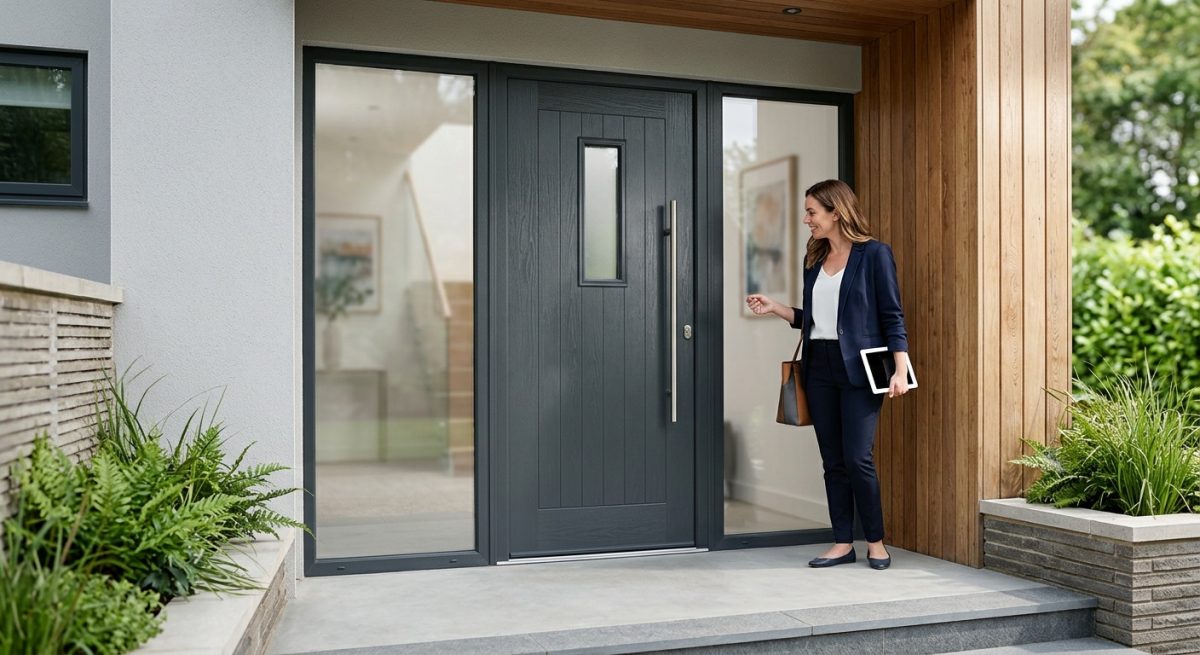
Understanding Composite Door Price Factors in 2026
So, you’re looking to upgrade your front door and wondering about the composite door price? It’s a smart move. Composite doors have really taken off, and for good reason. But before we dive into saving cash, let’s break down what actually makes up that number you see on the quote. It’s not just about the door itself; there’s more to it than meets the eye. This guide is for homeowners in the Tampa Bay area, from Clearwater to Brandon and everywhere in between, who want to make an informed decision and avoid overspending on this crucial home improvement.
Think of a composite door price as a recipe. You’ve got several key ingredients that all contribute to the final cost. Understanding these will help you see where you can potentially trim expenses or, conversely, where splurging a little might be worth it in the long run.
Material Quality and Construction
The core of a composite door is what truly sets it apart. We’re talking about dense polyurethane foam cores, reinforced frames, and a tough outer skin, usually made of PVC and other materials. Higher density means better insulation and security, but it also bumps up the composite door price. Some manufacturers use premium resins or more advanced layering techniques, which naturally command a higher cost. You’re paying for that enhanced durability and thermal performance. A flimsy door just won’t cut it in Florida’s intense sun and humidity, and you’ll pay for it in energy bills later. The U.S. Department of Energy highlights the importance of proper insulation for reducing home energy costs.
Design, Style, and Customization Options
This is where your personal taste really comes into play, and it directly impacts the composite door price. Want a sleek, modern look with a full-length glass panel? That’s going to cost more than a traditional six-panel design. Glazing options are a big one – from simple clear glass to intricate decorative leaded or stained glass effects, each adds to the expense. And don’t forget color. While standard colors are usually included, custom shades might come with a surcharge. It’s all about balancing aesthetics with your budget.
Hardware and Security Features
The bells and whistles on your door – the lock, the handle, the hinges – these aren’t just decorative. High-security multi-point locking systems, often featuring PAS 24 or Secured by Design certifications, add significant value and security, but they also add to the composite door price. A basic lever handle might be standard, but a premium brushed nickel or black matte finish can cost extra. And the type of lock cylinder matters too; opting for one with enhanced anti-snap and anti-bump features, which is pretty much non-negotiable these days, will add a bit to the bill.
Installation Costs: The Hidden Composite Door Price Component
Here’s the kicker: the door itself is often only half the story. Installation costs can be a substantial chunk of the total composite door price. This covers the labor of removing your old door, preparing the opening, fitting the new door, ensuring it’s perfectly plumb and level, and sealing everything up properly.
Factors like the complexity of the installation, whether any structural modifications are needed (unlikely but possible), and the disposal of your old door all play a role. In areas like St. Petersburg and Clearwater, where older homes are common, you might encounter framing issues that add unexpected costs.
Pros and Cons of Composite Doors
- Pros: Excellent security, high energy efficiency, low maintenance, wide range of styles and colors, durable against weather.
- Cons: Higher initial composite door price compared to uPVC or basic timber, customization can increase cost significantly, professional installation is often recommended.


